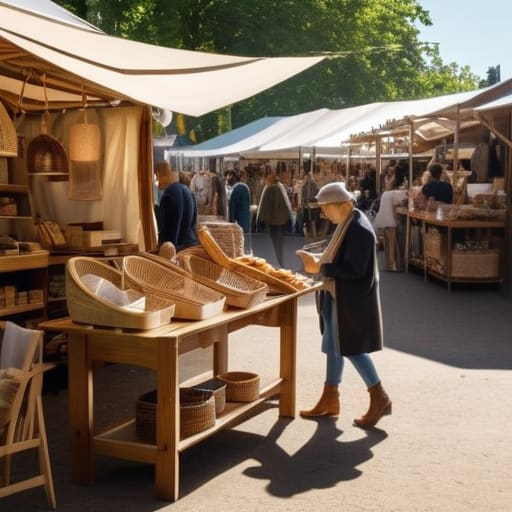
A Market Stall as a Marketing Channel
I just spent twenty minutes watching a “growth consultant” explain to a local florist why she needed a three-month lead time, a bespoke brand activation strategy, and a $5,000 booth design just to figure out how to exhibit at a local event. It made my blood boil. If you are a small firm without a dedicated marketing department, you don’t have three months to “strategize,” and you certainly don’t have five grand to burn on a display that looks like a Silicon Valley launch party. Most of this advice is just expensive noise designed to make simple tasks feel impossible.
I’m not here to sell you a complex roadmap or a multi-stage funnel. My promise is much simpler: I am going to show you how to get set up, get noticed, and actually get leads without wasting your entire week. I’ll give you the exact, stripped-back tactics I use for my clients that can be executed in a single afternoon. No fluff, no enterprise-level nonsense—just the practical steps you need to show up and win.
A Rapid Booth Setup Checklist for Busy Founders

Stop looking for a master plan. If you spend three weeks designing a custom-built modular display, you’ve already lost. Most local event marketing strategies fail because the founder spends more time on aesthetics than on actual interaction. Your booth setup checklist should be stripped back to the essentials: a clean tablecloth, a clear sign with your name/service, and something to write on. If you can’t pack it into the back of your car in twenty minutes, it’s too much.
Focus your energy on two things: visibility and contact capture. Don’t bother with expensive digital lead magnets that require a Wi-Fi connection that probably won’t work anyway. Instead, use a simple notepad or a basic spreadsheet on a tablet to track names and emails. I’ve seen people waste hours on complex trade show lead generation software only to realize they didn’t even have a way to talk to the person standing in front of them.
The goal is frictionless engagement. Have a physical “hook”—a sample, a printed tip sheet, or even just a very clear question written on a board—that gives people a reason to stop. If you can set the table, hang the sign, and start a conversation within an hour of arriving, you are already winning.
Simple Event Marketing Strategies That Actually Work

Stop trying to engineer a complex lead magnet. If I see one more small business owner trying to run a multi-stage digital nurture sequence from a folding table, I’ll lose it. Most event marketing strategies fail because they are too heavy. You don’t need a tablet, a complicated QR code landing page, and a follow-up email sequence that takes three weeks to build. You need a way to capture a name and an email address in under thirty seconds. Use a physical notebook or a simple Google Form on your phone. If the friction is too high, you won’t do it, and if you don’t do it, you’ve wasted your Saturday.
Instead of worrying about high-level exhibitor engagement techniques, focus on one thing: the conversation. Your goal isn’t to pitch your entire service catalog; it’s to find a reason to talk to the person standing in front of you. Ask a question, listen to the answer, and write down one specific detail about them. That single detail is worth more than any glossy brochure you could print. If you can’t summarize your value proposition in two sentences, you aren’t ready to exhibit. Keep it sharp, keep it fast, and keep it human.
Five Ways to Not Waste Your Weekend
- Stop printing 500 glossy brochures that will end up in a bin by Monday. Print 50 high-quality postcards with a single, clear call to action—like a discount code or a QR code to your booking page—and leave the rest.
- Ditch the “professional” backdrop if it takes two people and a van to carry it. A clean tablecloth with your logo and one clear, eye-catching sign is enough to tell people who you are without the logistics nightmare.
- Forget the complex lead-capture apps that require a Wi-Fi connection you won’t have. Grab a physical notebook and a pen. Write down the name, the one thing they actually cared about, and their email. Done.
- Don’t try to “pitch” everyone who walks past. Your only job is to start a conversation. If you spend the whole day talking at people instead of listening to their problems, you’ve failed the math of the event.
- Set a hard exit strategy. Decide before you arrive that you will leave at 4:00 PM sharp. If you stay until the organizers are sweeping the floors, you’re burning time that should be spent on actual client work.
The Bottom Line
Stop planning for a six-figure activation; if you can’t pack your kit into a single car trunk, you’re doing too much.
Forget “brand awareness” metrics; your only goal is to collect ten real names and phone numbers before you head home.
Don’t leave the event without a clear next step, or you’ve just spent a day standing around for nothing.
Stop Planning and Start Showing Up
Look, we’ve covered the essentials: keep your kit light, your message blunt, and your follow-up plan simple enough to execute while you’re still caffeinated. You don’t need a three-month campaign or a bespoke digital engagement strategy to make an impact at a local fair. You just need a clear way to capture contact details and a few high-quality items that won’t end up in a bin by Monday morning. If you can’t organize your booth and your lead list in a single afternoon, you’re overcomplicating the process. Focus on the tangible connections that happen when you actually stand behind a table instead of staring at a spreadsheet.
At the end of the day, marketing isn’t about having the biggest budget or the most polished presentation; it’s about being present in the rooms where your customers actually live. Most small business owners paralyze themselves trying to mimic enterprise-level tactics that were never designed for a team of one. Stop waiting for the “perfect” setup or the “optimal” ROI projections. Grab your flyers, get your folding table ready, and just get out there. Real growth happens in the messy, unscripted conversations you have on the floor, not in the strategic planning documents you’re currently overthinking.
Frequently Asked Questions
How do I know if the event is actually worth my time and money before I sign up?
Stop looking at the “expected attendance” numbers in the brochure. They’re usually inflated nonsense. Instead, ask the organizer for a list of last year’s exhibitors and, more importantly, the attendee demographics. If you can’t find a way to verify that your specific type of customer will actually be walking those aisles, walk away. If you spend more than twenty minutes vetting the event, it’s probably not the right one.
What is the bare minimum kit I need to bring so I don't look unprofessional but also don't spend a fortune?
Stop looking at expensive trade show catalogues. You don’t need a custom-built backlit tension fabric display. You need a clean tablecloth (iron it first), a sturdy table, and a high-quality printed banner or even just a few well-designed A3 signs in decent frames. Bring a notebook, a pen, and a way to capture contact details—a physical sign-up sheet works better than a complex tablet setup that might die mid-afternoon. Keep it tidy, keep it simple.
How do I actually talk to people without sounding like a desperate salesperson?
Stop pitching. The second you start “selling,” people’s internal alarms go off and they look for the nearest exit. Instead, treat it like a pub quiz: just ask questions. “What brings you to this event?” or “How are you handling [Problem X] at the moment?” Listen for the gap in their answer. If you can solve it, mention it. If not, give them a flyer and move on. Efficiency over ego.
What should I do with the contact info I collect so it doesn't just sit in a notebook gathering dust?
Stop treating that notebook like a diary. If you don’t move those names into a spreadsheet by tomorrow morning, they’re dead. Open Google Sheets, column A for names, B for emails, C for what they actually wanted. Once that’s done, send one—and only one—personal email. “Great meeting you at the event; here is that thing we discussed.” That’s it. No complex CRM, no automated sequences. Just a human connection before they forget you exist.
