
Writing for a Reader First
I spent three years watching small business owners throw money at “content agencies” that promised to solve their visibility problems with 3,000-word whitepapers and complex keyword clusters. It was a scam. They’d spend a month’s profit on a single piece of fluff that no human actually wanted to read, and then wonder why their traffic stayed flat. Most of the “experts” will tell you that you need a massive editorial calendar and a dedicated SEO specialist to figure out how to write an article that ranks and reads, but that is absolute nonsense for someone running a business solo.
I’m not here to sell you a complicated workflow or a 50-slide deck. My promise is simpler: I am going to show you a practical, stripped-back method to get your ideas online without needing a degree in data science. You will learn exactly how to write an article that ranks and reads using nothing more than a decent laptop and a single afternoon of focused work. No fluff, no enterprise-grade nonsense—just straightforward tactics that actually move the needle.
Mastering Search Engine Optimization Copywriting Fast

Stop treating SEO like a math exam you haven’t studied for. Most consultants will try to sell you on complex semantic SEO strategies that require a data scientist to execute; I’m telling you to ignore them for now. Real search engine optimization copywriting isn’t about stuffing twenty keywords into a paragraph until it sounds like a robot wrote it. It’s about picking one primary phrase that people actually type into Google and making sure it appears in your first 100 words and one subheading. That’s it. If you can’t do that in twenty minutes, you’re overcomplicating the process.
The real secret to staying visible is balancing SEO and readability. Google’s algorithms are getting smarter; they can tell when a human is bored. If your text is a wall of academic jargon, your bounce rate will spike, and your rankings will tank regardless of your keyword density. Use short sentences. Use bullet points. Focus on content hierarchy and formatting so a reader can skim your main points in ten seconds. If a busy business owner can’t get the gist of your article while waiting for a kettle to boil, you’ve failed the most important metric of all.
Simple Content Hierarchy and Formatting Tricks
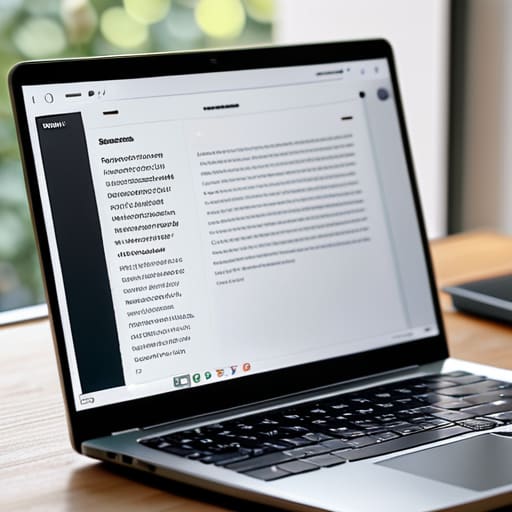
Stop trying to write a textbook. Most people don’t read online; they scan. If I open a page and see a wall of text that looks like a legal contract, I’m out in three seconds. You need to prioritize content hierarchy and formatting to keep people from bouncing. Break your thoughts into logical chunks using H2 and H3 subheaders. Think of these headers as signposts for a distracted reader. If they only read your headers, they should still walk away with the gist of your argument.
Next, use bullet points and short paragraphs. If a paragraph is longer than four lines, chop it up. This isn’t just about aesthetics; it’s about improving content engagement metrics. When a page is easy to navigate, people stay longer, which signals to Google that your content actually provides value.
Finally, embrace white space. Don’t feel the need to fill every inch of the screen with words. A little breathing room around your text makes it much easier on the eyes, which is a massive part of user experience in content writing. Keep it punchy, keep it clean, and for heaven’s sake, stop using massive blocks of text to hide the fact that you don’t have a point to make.
Five Ways to Stop Writing for Robots and Start Writing for People
- Use “You” more than “We.” If your article sounds like a corporate brochure, people will bounce before they hit the second paragraph. Talk to the reader like you’re explaining a concept over a pint.
- Kill the fluff. If a sentence doesn’t provide a fact, a step, or a solution, delete it. I don’t care how “engaging” you think your preamble is; if it takes three paragraphs to get to the point, you’ve lost them.
- Answer the question in the first 100 words. Google wants to see relevance, and so do humans. Don’t bury the lead under layers of “In today’s fast-paced digital landscape” nonsense. Just give them the answer.
- Write your subheaders as questions. People don’t read anymore; they scan. If your subheaders are “Strategic Implementation Methodologies,” they’ll skip them. If they are “How do I actually start this?”, they’ll stop and read.
- Read it out loud once. If you run out of breath before a sentence ends, it’s too long. Break it up. Short sentences create rhythm; long, rambling ones create headaches.
The Afternoon Audit: Three Rules to Live By
Stop chasing every keyword under the sun; pick one specific problem your customer has, answer it clearly, and move on.
If your text looks like a wall of granite, no one will read it—use subheaders and bullet points so a busy person can skim it in thirty seconds.
Forget the complex analytics dashboards for now; if your article is helpful and easy to find, the numbers will eventually follow.
Stop Planning and Start Publishing

Look, we’ve covered the essentials: stop trying to write a textbook and start writing for humans. You don’t need a complex keyword mapping spreadsheet or a dozen different formatting styles to see results. You just need to nail your SEO basics without losing your voice, use clear headings so people can actually skim your work, and keep your sentences short enough to be read on a phone between meetings. If you can’t structure a post and optimize it in the time it takes to finish a lunch break, you’re overcomplicating it. The goal isn’t perfection; it’s utility over complexity.
My biggest piece of advice is this: stop waiting for the “perfect” strategy to arrive. Most small businesses fail at content because they spend six months planning a campaign that a single person couldn’t actually execute. You don’t need an agency or a massive content calendar to win. You just need to show up, answer the questions your customers are actually asking, and hit publish. High-ranking content isn’t about outsmarting an algorithm; it’s about being the most useful person in the room. Now, go write something.
Frequently Asked Questions
How do I know if I’ve actually used enough keywords without making the whole thing sound like a robot wrote it?
Stop counting. If you’re staring at a keyword density spreadsheet, you’ve already lost. I don’t care about hitting a specific percentage; I care about whether a human can read your sentence without gagging. Read your draft out loud. If you stumble over a phrase because it feels clunky or unnatural, delete it and use a synonym. If you’ve answered the user’s actual question, the right keywords will naturally show up. Trust your ears, not a calculator.
If I don't have time for a long-form deep dive, can a short 400-word post actually rank?
Yes. In fact, if you’re trying to answer a specific, punchy question, a 400-word post is often better than a 2,000-word manifesto that wanders. Google wants to satisfy intent, not reward word counts. If your 400 words answer a specific problem clearly and use the right headers, you’ll outrank the fluff every time. Don’t write a dissertation when a direct answer will do. Get in, answer the question, and get back to work.
How much time should I realistically spend on formatting versus actually writing the content?
If you’re spending more than 20 minutes on formatting, you’re procrastinating. The split should be 80/20. Spend the bulk of your afternoon getting the raw ideas and data onto the page. Formatting—bolding key sentences, adding bullet points, and fixing headers—is just the final polish to make it skimmable. If the writing is rubbish, no amount of clever bolding will save it. Write first, tidy up last, and get on with your day.
What’s the quickest way to check if my headings are actually helping my SEO or just cluttering the page?
Open your draft, scroll through, and ignore the body text. If you can’t understand exactly what the article is about just by reading the headings, they’re clutter. For SEO, each heading needs to act like a signpost containing a keyword your customer actually types into Google. If a heading is “clever” or “poetic” but tells me nothing about the subject, delete it. Stick to descriptive, high-intent phrases. It takes ten minutes.
